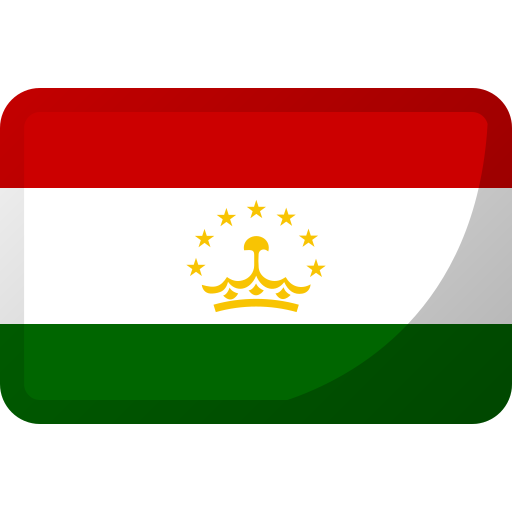

The flag is a symbol of freedom, loyalty, unity, dignity, and the embodiment of national pride. For our people, the raised flag represents national identity and awakened consciousness, and they show deep gratitude and reverence for this sacred emblem.
In ancient times, it was known as Dirafsh-i Kāviyānī, the banner of Kova the Blacksmith, a symbol of resistance against tyranny. Decorated with gold and jewels, it was considered a source of pride. Throughout history, our ancestors referred to it with the authentic Tajik words parcham and dirafsh, both symbolizing freedom and our ancient statehood. We take pride in the fact that in Dushanbe, the beloved capital of Tajiks, the squares of the National Flag and National Emblem have been named as symbols of state sovereignty.
Anyone fortunate enough to possess a sense of pride in independence and national identity is a true child of the nation. Our National Flag symbolizes the stability of our state and identity, and respecting it means respecting the Tajik nation and our precious homeland. Indeed, Tajikistan is a paradise on earth, the most beautiful ancestral homeland, whose people once faced persecution and oppression.
However, independence bestowed upon our nation the refreshing breeze of freedom. Today, in this era of wisdom and self-determination, the time has come for our nation to take pride in the Flag and Emblem and to bravely defend its borders. Thus, the wisdom embodied in the National Flag is the revival of historical memory and the affirmation of Tajik statehood and national independence.
Studying and understanding the flag is essential for shaping national identity, strengthening thought, and reinforcing the foundations of the national state. The history of the flag as a national and state symbol traces back to ancient times. Among the peoples of Iranian origin, the emergence of the flag dates to very early historical periods.
The word parcham is of Sogdian origin (“parčam”), meaning “lock of hair” or “silken tuft” attached to a spear or banner. From Sogdian, it entered the Persian language and eventually came to denote the banner itself. Other terms such as dirafsh, alam, bayraq, livo, rayat were also used to refer to flags.
One of the earliest references to the use of the dirafsh among Aryan peoples appears in the Avesta. In the first chapter of the Videvdad, it is written of Balkh — the capital of Kavi Vistaspa, patron of Zoroaster:
“Baxδim sriram ərəδβō.drafša-” — “Beautiful Balkh with its raised banners.”
The Avesta also mentions the “bull-emblem banners” (gaoš-drafša) and the flags of the enemies of the Aryans.
As a symbol of national honor and dignity, the flag, in critical historical moments, awakened strong patriotic feelings in people's hearts and guided the nation toward a peaceful and prosperous future. Under the State Flag, the people began the process of development and construction, achieving remarkable progress in many areas of life and faithfully safeguarding the achievements of independence.
Today, we teachers must honor the State Flag as the first sacred emblem of the state, peace, and stability. It symbolizes the identity, statehood, and unity of the peoples of this land, and represents the honor and dignity of every nation and its citizens. The national flag embodies the political image of a country on the world stage.
In this context, the following poem is dedicated to the National Flag of Tajikistan:
My pride, glory and magnificence is the flag,
The symbol of the country, the fluttering of my homeland is the flag.
Since the time of Kova, the flag is our heritage,
One of the great symbols of this glorious land is the flag.
Sharipova Roziyamo Saidhodjaevna
Assistant of the Department of Digital Finance, Audit and Blockchain Data Analysis Technologies

president.tj
maorif.tj
kjv.tj/