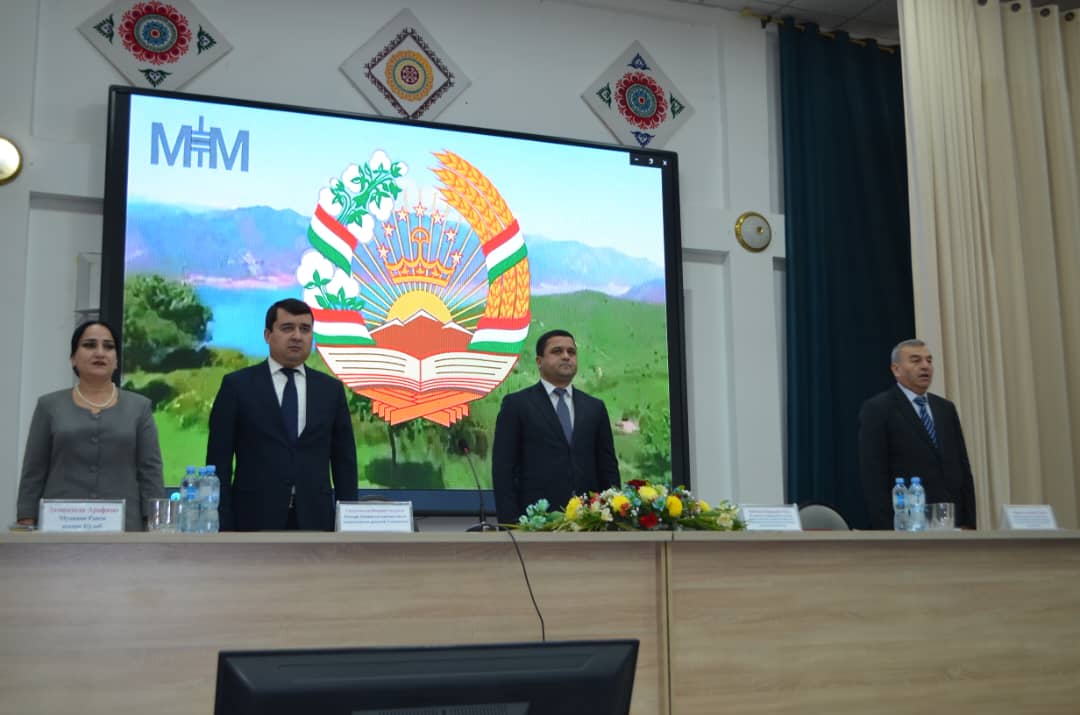
Under this title, on December 8, 2025, in the hall of the Tajik University of Innovation and Digital Technologies, at the initiative of the leadership of the Agency for State Financial Control and Combating Corruption of the Republic of Tajikistan in the cities and districts of the Kulob region, in cooperation with the Tajik University of Innovation and Digital Technologies and dedicated to the "International Anti-Corruption Day," which is celebrated annually on December 9, a conference was held.
The conference was attended by the university leadership, officials and staff of the Agency for State Financial Control and Combating Corruption of the Republic of Tajikistan in the cities and districts of the Kulob region, Deputy Mayor of Kulob City Daminzoda Arafamo, heads of secondary vocational and general education institutions of Kulob, as well as university professors and students.
The speakers emphasized that corruption, from ancient times to the present, has been one of the negative phenomena and a major obstacle to the successful implementation of human rights and freedoms, hindering national development, economic growth, and social well-being.
Therefore, to prevent all crimes and offenses and to combat corruption, on October 31, 2003, the “UN Convention against Corruption” was adopted, and on December 9, 2003, more than 100 countries of the world signed this international document at an international conference. It should be noted that the Republic of Tajikistan, as a full member of the international community, also joined this Convention on September 25, 2006.
Through the direct initiative of the Founder of Peace and National Unity — the Leader of the Nation, Emomali Rahmon, with the aim of combating corruption-related offenses and crimes, eliminating duplication of functions and powers in public administration, ensuring transparency, and improving regulatory activities, on January 10, 2007, the Agency for State Financial Control and Combating Corruption of the Republic of Tajikistan was established as a special state body.
It should be noted that since the earliest days of the country's independence, the issue of combating corruption has been at the center of the wise policy of the Founder of Peace and National Unity — the Leader of the Nation, President of the Republic of Tajikistan Emomali Rahmon, who consistently emphasizes the need to eliminate and reduce the intensity of this negative phenomenon in his speeches and meetings.
“Corruption is a negative and dangerous phenomenon for society, and combating it is the primary responsibility of government agencies, civil society institutions, and every citizen of the country. Society must not remain indifferent in the fight against corruption and should serve the people and the homeland with integrity. Only under such conditions can we achieve the socio-economic development of the country, which is one of the main goals of the Government.”
The following presentations were heard during the conference:
“Anti-corruption legislation and combating corruption in the Republic of Tajikistan”
Justice Lieutenant Colonel Rozikzoda Alikhon Abdulhakim — Head of the Department for Combating Corruption of the Agency for State Financial Control and Combating Corruption in the cities and districts of the Kulob region;
“The role of education and science in shaping an anti-corruption culture”
Police Lieutenant Colonel Nurullozoda Mehrullo — Head of the Police College of the Ministry of Internal Affairs of the Republic of Tajikistan, located in Kulob City;
“The negative impact of corruption on the political upbringing of youth”
Mirzoev Nekkadam Saydamirovich — lecturer of the Kulob State University named after A. Rudaki;
“Factors contributing to corruption in the higher education system and mechanisms for reducing it”
Boronova Rukshona Abdurassulovna — Head of the Department of Law and Humanities at the Tajik University of Innovation and Digital Technologies.
After the speeches and discussions, the conference concluded with the adoption of a unanimous resolution consisting of proposals and recommendations.

president.tj

maorif.tj
kjv.tj/