
(On the occasion of November 24 — National Flag Day of the Republic of Tajikistan)
The National Flag is one of the most important symbols of Tajikistan’s independence and modern statehood. It reflects the historical foundations of the Tajik people, symbolizes ancient state traditions, and expresses the goals, aspirations, and dreams of the entire nation. The history of the flag as a national and state symbol goes back to ancient times, especially among the Iranian-speaking peoples, whose flags appeared thousands of years ago.
Originally, flags were not made of cloth as they are today. They served as symbols of unity, summons, and resistance. Various objects represented affiliation with a tribe, army, faith, or community. History shows that the ancestors of the Tajik people possessed their own national symbol from the dawn of human civilization — the “Mehrab” or “Farri Aryayi” — representing the sun, purity, eternity, and the four elements (earth, water, fire, air), the foundation of creation.
The “Drafsh-e Kaviani” is one of the earliest documented flags. It appears in Sasanian-era epic literature such as “Yadgar-e Zariran”, which recounts the battles between Iran and Turan. It describes how Giromik, a disciple of Zoroaster, clenched the banner with his teeth and fought heroically.
The word parcham is Sogdian (meaning “lock of hair” or “silk tassel”), originally tied to the top of spears or flagpoles. It passed from Sogdian into Turkic, then into Persian, eventually coming to mean “flag.” According to M. Jafar Yahaghi’s Dictionary of Myths, the word drafsh in Middle Persian means “to shine,” as ancient flags were decorated with jewels that glittered when raised.
According to Ferdowsi, the “Drafsh-e Kaviani” was made from lion skin and later adorned by Fereydun with precious stones after defeating Zahhak.
The ancient flag consisted of red, yellow, and purple colors, as described in the Shahnameh’s tale of Kaveh the Blacksmith.
After the fall of the Sasanian Empire, this tradition weakened, and Islamic banners became dominant during the rule of the Saffarids, Tahirids, Samanids, Buyids, Muzaffarids, Kurt dynasty, and Sarbadars.
Throughout history, civilizations such as the Persians, Assyrians, Babylonians, Egyptians, Greeks, Romans, Chinese, and Indians had their own national symbols, cultures, and flags. Among the oldest and most recognized historical banners is the Drafsh-e Kaviani, preserved as a symbol of freedom and sovereignty.
A new proud chapter of Tajik flag history emerged during the Achaemenid, Arsacid, and Sasanian periods. The Achaemenids adopted the Drafsh-e Kaviani as their official state banner and carried it during royal ceremonies. It was decorated with white, red, and purple colors and united more than 23 satrapies. Over generations, kings embellished it with more jewels. Later, an eagle (and then the mythical bird Huma) holding two spheres appeared on the banner.
The medieval historian Abumansur Tha'alibi notes that after defeating Zahhak, Fereydun decorated the banner with gold, silver, rubies, and jewels. Abū Rayhān al-Biruni confirmed its use as a powerful unifying symbol among Aryan tribes.
The historian Muhammad Jarir al-Tabari recounts how the cruelty of Zahhak led Kaveh the Blacksmith to revolt: he lifted his leather apron on a spear, creating the first people’s flag — the future Drafsh-e Kaviani.
November 12, 1991: A national contest was announced to design the new flag, emblem, and anthem of independent Tajikistan.
March 20, 1953: The Soviet-era flag with four horizontal stripes, a hammer and sickle, and a red star was approved.
October 23, 1981: A new standardized design of the Tajik SSR flag was adopted.
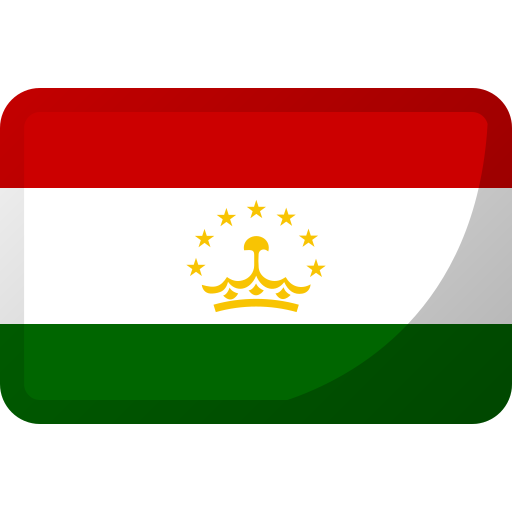
November 24, 1992: The XVI Session of the Supreme Council adopted the modern tricolor flag: red, white, and green with a golden crown and seven stars.
Its legal status is established by Law № 254 (May 12, 2007) “On the State Symbols of the Republic of Tajikistan”.
From more than 200 submitted designs, the winning project was developed under the leadership of Zuhur Habibulloev, with Mahmadullo Saydaliev recognized as the official author of the state flag and emblem.
After the collapse of the USSR, Tajikistan adopted its national flag at the historic XVI Session held on 24 November 1992 in Khujand. Since then, this day is celebrated annually as National Flag Day.
In September 2011, to commemorate the 20th anniversary of independence, one of the world’s tallest flagpoles — 165 meters — was erected in the heart of Dushanbe, symbolizing the unity and endurance of the Tajik nation worldwide.
Saburova Ilolbi Ghafforovna
Senior Lecturer, Department of Law and International Relations
Tajik University of Innovation and Digital Technologies

president.tj
maorif.tj
kjv.tj/