
GLOBAL INITIATIVES OF THE LEADER OF THE NATION AND TAJIKISTAN’S CONTRIBUTION TO ENSURING THE SAFE, SECURE AND TRUSTWORTHY DEVELOPMENT OF ARTIFICIAL INTELLIGENCE
In the contemporary system of international relations, the influence and role of states are determined not only by their political, economic and military capabilities or geopolitical position, but also by their capacity to participate in addressing regional and global challenges through initiatives capable of attracting the attention of the international community to issues of worldwide significance, linking national and universal interests, and creating a foundation for an inclusive international agenda. From this perspective, during the period of independence, the foreign policy of the Republic of Tajikistan has gradually acquired a proactive character, transforming the country into an active participant in international affairs and an initiator of proposals concerning important global issues.
The Founder of Peace and National Unity — Leader of the Nation, President of the Republic of Tajikistan, His Excellency Emomali Rahmon, has played a key role in shaping this approach to foreign policy. The initiatives put forward by Tajikistan from the rostrum of the United Nations have been consistent and comprehensive, encompassing issues ranging from water, climate change and glacier preservation to peace, legal awareness and, at a new stage, the safe, secure and trustworthy development of artificial intelligence for the benefit of the international community.
In the contemporary context, the practical significance of these international initiatives for Tajikistan lies in establishing a mechanism of “initiative diplomacy,” which has become one of the effective instruments of the country’s foreign policy at both regional and global levels. The essence of such diplomacy consists in identifying challenges of global importance, bringing them to the attention of the international community, and promoting multilateral cooperation to address them collectively, thereby creating a foundation for international solidarity in resolving common challenges. This approach enables a state to strengthen its international standing as an active actor in the system of international relations through proposals, initiatives, confidence-building and cooperation.
A successful example of such a policy is the initiatives of the Founder of Peace and National Unity — Leader of the Nation, President of the Republic of Tajikistan, His Excellency Emomali Rahmon, in the field of water and his call for constructive cooperation among states in addressing existing challenges in this area. At the international level, these efforts laid the foundation for Tajikistan’s water diplomacy. It should be emphasized that through this major initiative, Tajikistan succeeded in moving the issue of water beyond the boundaries of a purely environmental or regional concern and linking it at the global level with international security, sustainable development, food security, energy, climate change and interstate cooperation.
At the initiative of the Founder of Peace and National Unity — Leader of the Nation, President of the Republic of Tajikistan, His Excellency Emomali Rahmon, and owing to Tajikistan’s active role and contribution within the United Nations, 2003 was proclaimed the International Year of Freshwater; the International Decade for Action “Water for Life,” 2005–2015, was implemented; 2013 was proclaimed the International Year of Water Cooperation; and the International Decade for Action “Water for Sustainable Development,” 2018–2028, was launched. The continuity of these initiatives demonstrates that water diplomacy is not a temporary or exclusively regional undertaking for Tajikistan, but rather a sustainable and practical direction of the country’s foreign policy aimed at addressing challenges facing the international community and defining Tajikistan’s role and contribution at the global level.
Another important stage in Tajikistan’s international initiatives is associated with addressing the challenges of climate change and glacier preservation. Initiatives in this area laid the foundation for climate and glacier diplomacy, linking climate change and the rapid melting of glaciers with water resources, environmental security, energy security and food security at both global and regional levels. Recognizing the transboundary nature of these processes in a timely manner, Tajikistan brought the issue of glacier preservation to the United Nations and drew the attention of the international community to the need for timely and coordinated action. The proclamation of 2025 as the International Year of Glaciers’ Preservation and 21 March as World Day for Glaciers demonstrates that the initiatives of the Founder of Peace and National Unity — Leader of the Nation, President of the Republic of Tajikistan, His Excellency Emomali Rahmon, together with Tajikistan’s growing role and contribution to international relations, have evolved from political proposals into practical mechanisms capable of influencing the international agenda.
The subsequent stage of Tajikistan’s initiatives has been further broadened by other important issues, including initiatives related to World Football Day, the International Year of Legal Literacy — 2027, and the International Decade for Strengthening Peace for Future Generations — 2027–2036. These initiatives further enhance Tajikistan’s role and contribution to diplomacy concerning environmental and natural issues, as well as social, humanitarian and security matters within the system of international relations. This process contributes to presenting our country as an influential and active participant in international and regional cooperation.
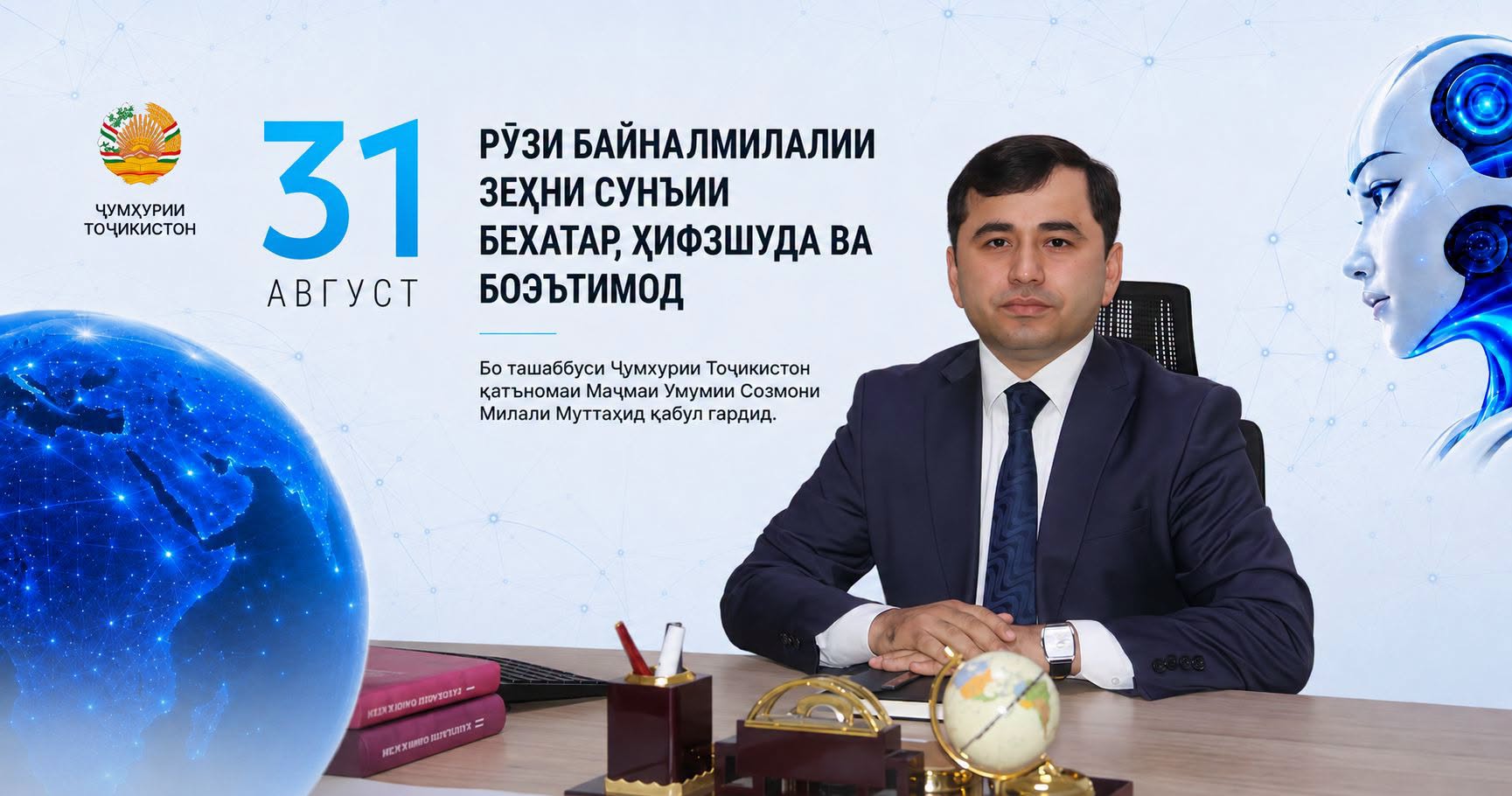
Within the framework of his productive domestic and foreign policy activities, the President of the Republic of Tajikistan, His Excellency Emomali Rahmon, has put forward another initiative concerning the proclamation of 31 August as the “International Day of Safe, Secure and Trustworthy Artificial Intelligence.” From a political perspective, this proposal is not limited solely to a technological issue. On the contrary, it relates to one of the key challenges of global governance in the twenty-first century: regulating the development of artificial intelligence and ensuring human security in the context of digital transformation.
Today, artificial intelligence is no longer merely an object of technical research. It is gradually becoming an economic, political and geopolitical factor, influencing the structure of the labour market, public administration, national security, the information environment, economic competition and even the balance of power within the international system. States that possess advanced technologies, infrastructure, data and algorithms gain new opportunities to influence global processes.
At the same time, the rapid development of artificial intelligence gives rise to a number of new political and legal challenges, including the protection of personal data, cybersecurity, the spread of misinformation and AI-generated content, the influence of algorithms on public opinion, accountability for automated decisions, the digital divide, and the potential use of artificial intelligence technologies contrary to human interests. Therefore, the central question is no longer simply, “How should artificial intelligence be developed?” The political and strategic question is: “How should its development be governed so that technology serves human security, rights and interests?” It is precisely this issue that gives the subject its international significance.
The proposal to designate 31 August as the International Day of Safe, Secure and Trustworthy Artificial Intelligence emphasizes the need to develop a shared sense of responsibility within the international community regarding the advancement of artificial intelligence technologies. Digital technologies transcend national borders, and both the opportunities and risks associated with them acquire a transnational character. Consequently, ensuring AI safety and security requires multilateral cooperation, exchange of experience, the development of common principles and the strengthening of international trust.
The significance of the initiative of the Leader of the Nation lies in the fact that, at the global level, it contributes to promoting the safe and human-centred use of artificial intelligence; at the political level, it strengthens Tajikistan’s role and contribution as a supporter of the responsible development of emerging technologies; and at the national level, it creates favourable conditions for the advancement of science, the training of competitive specialists and the strengthening of information security. In this regard, this initiative may be regarded as a logical continuation of Tajikistan’s initiative diplomacy and as a new stage in the development of the country’s digital and technological diplomacy.
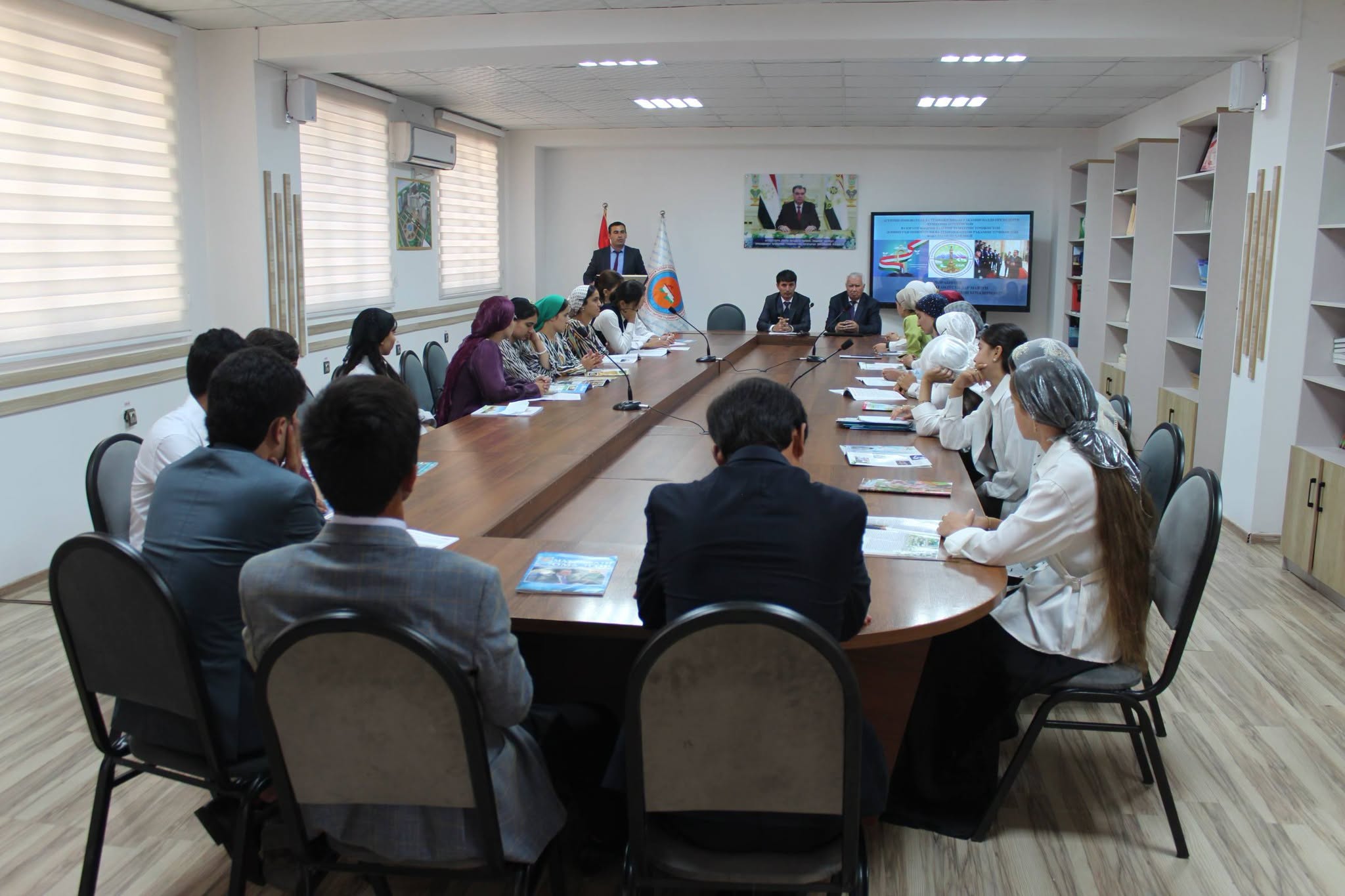
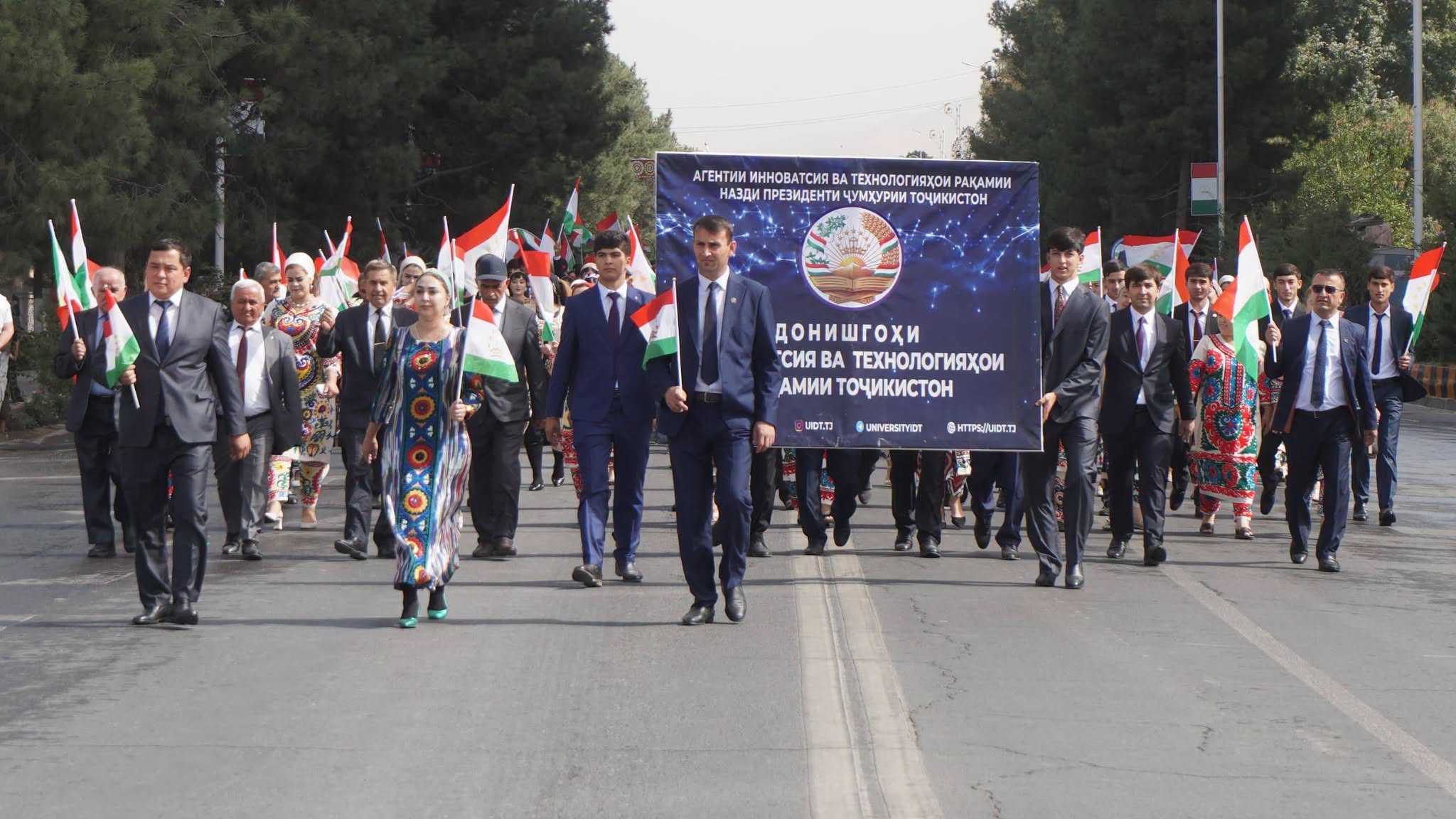
We, the staff of the Tajikistan University of Innovation and Digital Technologies, support this initiative of the Leader of the Nation with great pride and a profound sense of responsibility. We believe that support for this initiative should also find practical expression in scientific and educational activities.
The Tajikistan University of Innovation and Digital Technologies considers itself responsible for training highly qualified specialists in artificial intelligence, programming and information security, promoting scientific research, and fostering a culture of safe and responsible use of modern technologies. The University regards the favourable development and advancement of these areas in its educational and scientific activities as one of its key priorities.
Aminjon Husainzoda
Vice-Rector for Academic and Methodological Affairs
Tajikistan University of Innovation and Digital Technologies